Turkey Tours
Türkiye’ye hoş geldiniz!
A crossroads of civilizations, Turkey spans two continents, and the country’s long-standing blend of religion and heritage has left a trove of significant historic sites.
Things to do and see
Experiences that define Turkey
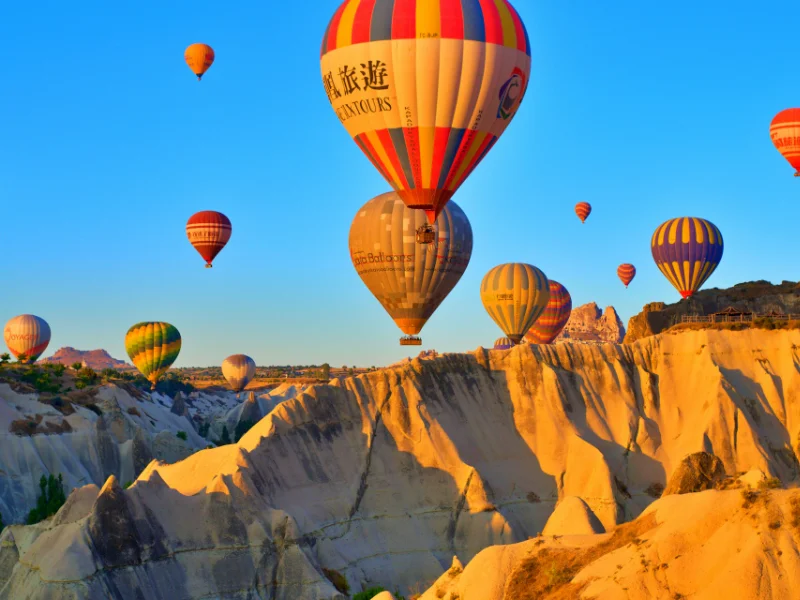
Hot air balloons in Cappadocia
Float over Cappadocia by balloon—sunrise skies, fairy chimneys, and unforgettable views of Turkey’s surreal landscapes.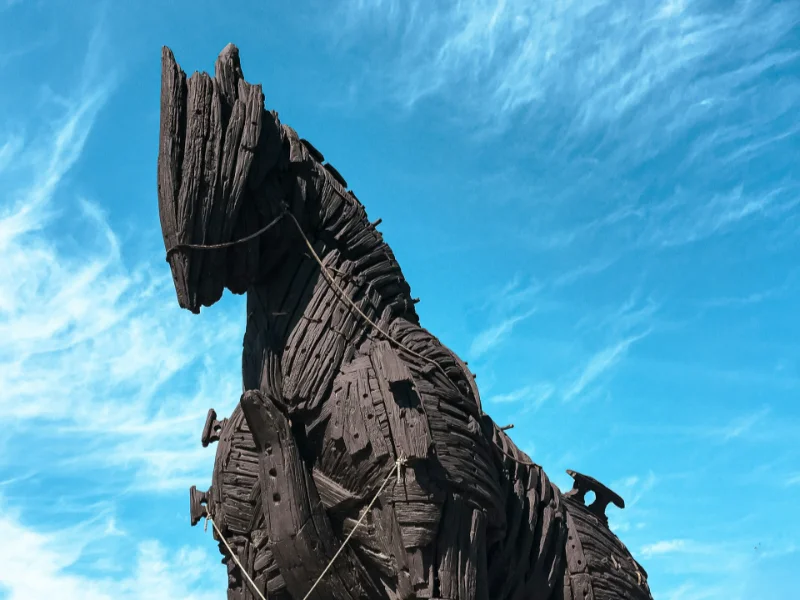
Ruins of Troy
Visit the ruins of Troy—ancient walls, legends of the Iliad, and layered archaeology on Turkey’s Aegean coast.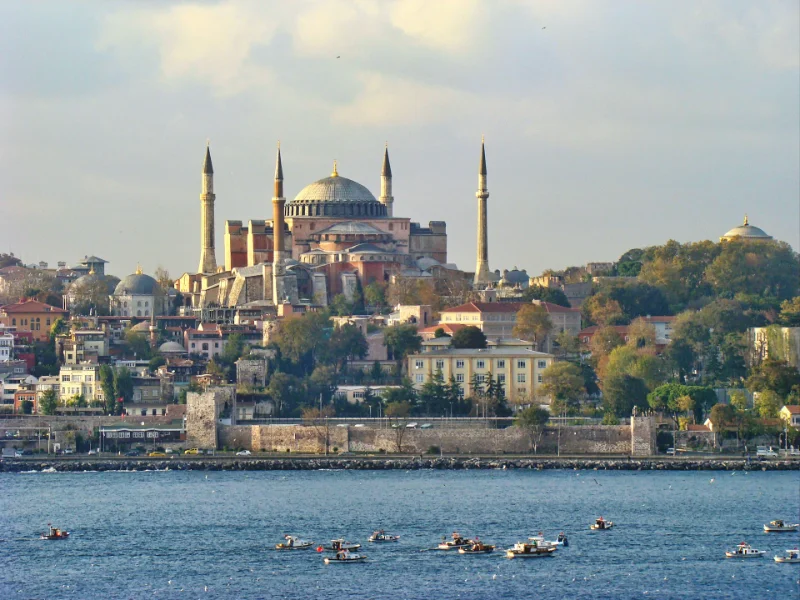
Hagia Sophia Grand Mosque
See Hagia Sophia—iconic domes, Byzantine mosaics, and centuries of history in Istanbul’s most famous landmark.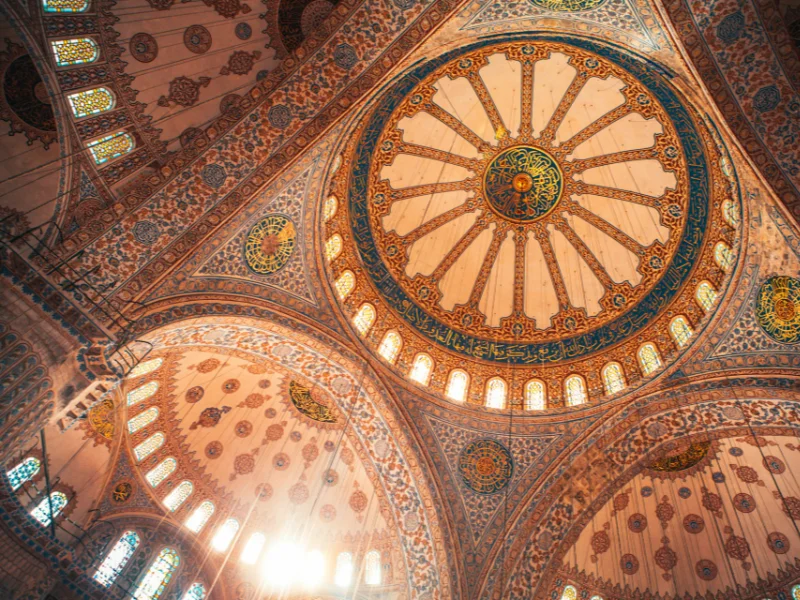
The Blue Mosque
Visit the Blue Mosque—Ottoman splendour, soaring minarets, and blue-tiled interiors in Istanbul’s historic centre.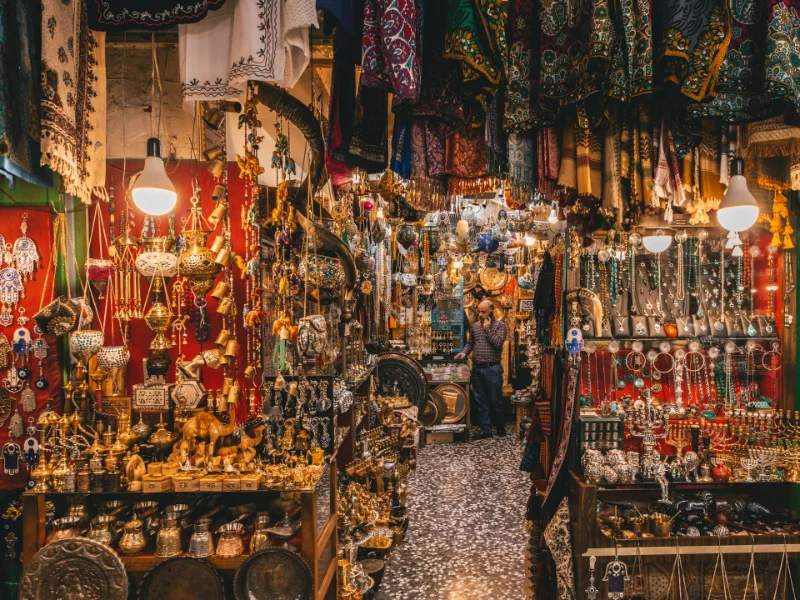
Grand Bazaar
Shop the Grand Bazaar—lanterns, carpets, spices, and endless stalls in one of the world’s oldest covered markets.Best time to travel
Ruins & Turquoise Coast
Apr-Jun, Sept-Oct. Comfortable for Cappadocia and Mediterranean beaches.

Most popular time
Resorts are busiest July - August

Most budget-friendly
Winter season is November - March

Favourite season
Most people like to visit during June - August

Culturally significant times
Visit in August for Cappadocia Balloon Fest
Need to know
Turkey at a glance

Time Zone
Turkey Time (UTC +3)

Climate
Mediterranean on the coast, continental inland

Currency
Turkish Lira (TRY)

Transportation
Metro, ferries, dolmuş minibuses, buses

Local cuisine
Grilled kebabs, baklava, and shared meze plates

Languages Spoken
Turkish
Frequently asked questions
Because planning should feel exciting, not exhausting.
Visa requirements may change, for the most up to date information we recommend using our Entry Requirements tool. Alternatively, check the Turkish embassy website in your country of departure.
Recommended vaccinations include hepatitis a, hepatitis b, rabies, and tetanus. As advice can often change, you can check out Entry Requirements tool for the most up-to-date details on vaccination requirements.
Turkey is a large country, so the best time to visit really depends on what you’re looking to do there. June to August is hot everywhere, with temperatures reaching 28°C to 33°C (82°F to 91°F), so your best bet is probably to head to the coast during this time period. Expect plenty of crowds however. April and May bring occasional showers but fantastic flower blooms, and September and October see warm and pleasant temperatures with occasional showers. Both of these time periods are the time to come if you’re wanting to go hiking or be active. November to February it really cools off here and you can expect lots of rain and drizzle — central areas may even see snow.
Turkey experiences a Mediterranean climate, with hot and sunny dry summers and relatively mild winters. The hottest month of the year is July, with an average daily maximum of 35°C (95°F). The coldest month of the year tends to be January, when it can get down to around 5°C (41°F). In terms of rainfall, January tends to have the most — expect up to 70 millimetres (2.75 inches) per month.
It is customary in Turkey to tip service providers such as waiters, at approximately 10%, depending on the service. Tipping is expected, though not compulsory, and shows an expression of satisfaction with the people helping you on your tour. There are several times during the trip where there's an opportunity to tip the local guides or drivers we use. You may do this individually, or your CEO will offer to collect the money and tip as a group. Recommendations for tipping drivers and local guides would range from USD$ 15-20 USD per week depending on the quality of the service. Tipping your G Adventures CEO is also very much appreciated. The amount is entirely a personal preference; however as a guideline USD$ 40-45 per person, per week is our recommendation in the region. However, if you felt your CEO did an especially outstanding job, any additional amount is always welcome.
The Wi-Fi in Turkey is probably not as fast as the rest of the EU, though you’ll be able to access it in pretty much every hotel, hostel, cafe, restaurant and bar in major cities and towns. When you’re in more rural areas, expect it to be more limited.
ATMs are widely available in large cities and towns, and both Visa and Mastercard are widely accepted. We’d recommend bringing both if possible as some ATMs will only accept one variety. Check with your bank to see how much you may be charged for withdrawals — consider bringing cash in USD too. As currency exchange rates can fluctuate often we ask that you refer to www.xe.com for daily exchange rates.
Even though it’s legal to be gay in Turkey, it’s still not the most LGBTQ+-friendly place in the world. Much of the country outside of Istanbul is still fairly conservative, so we’d recommend using discretion and avoiding public displays of affection. As part of their commitment, all CEOs receive LGBTQ+ inclusion training so every traveller feels respected and welcomed on all of our tours. We commit to making our tours a safe and inclusive place for people to express their authentic selves without judgement, free from any discriminatory language or harassment. While travelling with G Adventures, all travellers must treat each other with dignity and respect to create an environment that is positive, safe, and where everyone feels welcome. You can find out more via our LGBTQ+ travel page.
Turkish is the predominant language spoken in Turkey, and 90% of the population speak it. There are around 70 other languages and dialects spoken here too — including Armenian, Greek and Kurdish.
Officially, the tap water in Turkey is safe to drink. However, it’s often heavily-chlorinated, so you may choose to drink bottled water instead. Please note however that all drinks provided on our tours are safe to drink (including drinks with ice), as well as the water in most hotels and restaurants visited on tour. If in doubt, please ask your CEO for further info.
Generally speaking, Turkey is a very safe country in which to visit — particularly within tourist areas. However, that said, it always pays to be aware of petty crime (like pickpocketing), tourist scams and touts — particularly in larger cities. It’s uncommon, but female travellers might also attract some unwarranted attention. Dress modestly and you should be fine. G Adventures takes all reasonable measures to ensure your safety and enjoyment while travelling with us. All of the included activities are properly vetted and regularly checked by us, and we take great care in choosing the right transportation, stays throughout your trip, and guides to lead your tour. However, there are always inherent risks when travelling — you can find out more via our travel safety page.